Afghan Fashion
Mirrors that catch the light, coins that carry a king's face, ink that outlasts memory
Afghan fashion does not whisper; it announces itself. It is unrepentant in its maximalism, each piece hand-stitched and embroidered with the language of its heritage.
Afghanistan has always been at the crossroads of history, and nowhere is this more apparent than in the intricate tapestry of its fashion. For me, it has always remained a connection to some of my earliest memories.
As a child, I hadn’t really appreciated the effort and artistry that made up Afghan fashion; I only knew that it was beautiful.
Like many things in childhood, it had simply formed the background of my memories. It wasn’t until I grew older that I began to understand the traditions woven into every stitch.
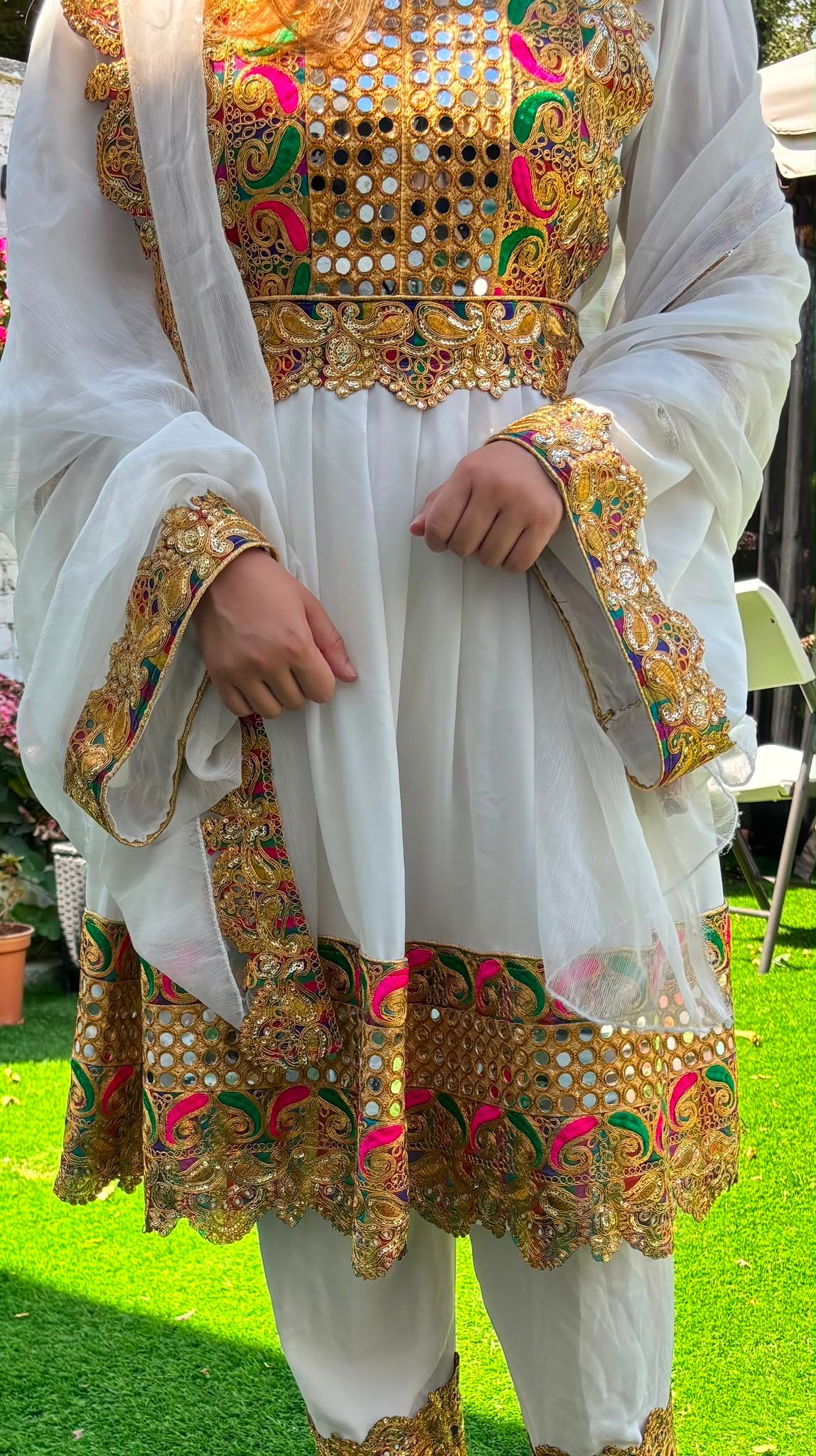
Nowhere is the artistry more evident than in the traditional dresses that have come to embody the spirit of our culture. The one I own is a light, flowy white dress with golden embroidery woven into the bodice, sleeves and hem of the dress.
Little mirrors (Ayna) are embedded into the bodice, which catch the sunlight with every movement. Some people believe that they reflect more than just the light, deflecting away the evil eye or negative energies that intend to harm you.
Afghan traditional dresses differ significantly based on which region and ethnic group they originate from, with some examples of the country’s diversity in attire being the Pashtuns, Hazaras and Tajiks.
While the styles can overlap at times, Pashtun dresses can be recognised through their common use of geometric designs and vivid colours, whereas Hazara garments frequently use silk or velvet, and Tajiks can be seen incorporating floral designs into their attire. However, the craftsmanship isn’t limited to the dresses alone.
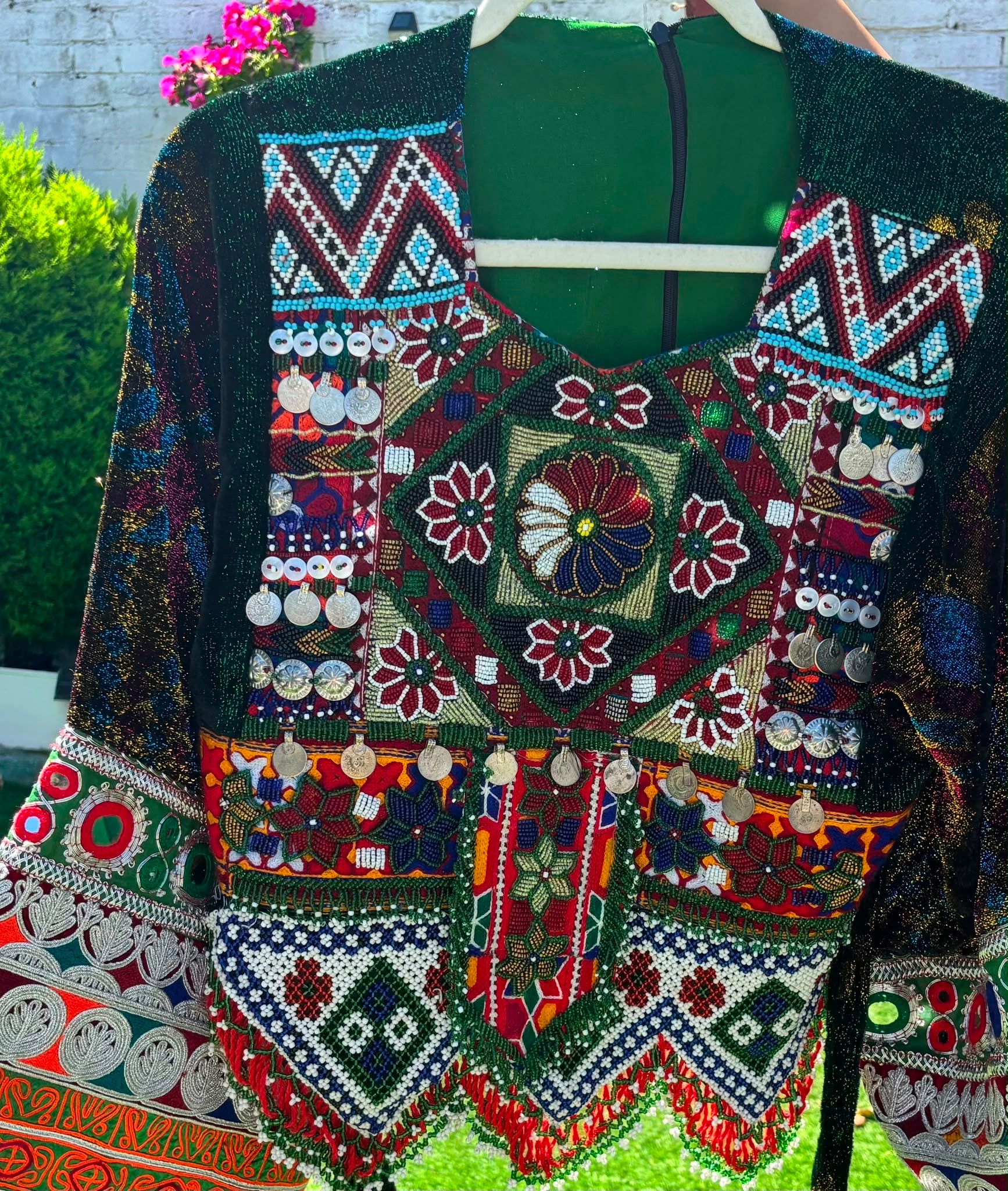
Another one of my favourite examples of this artistry is embodied by a gorgeous green velvet waistcoat I was gifted.
The weight of it was the first thing I noticed, a result of the thousands of intricate bead designs hand-stitched into floral patterns all across the front. It has silver coins attached across the centre, most of them worn smooth until their previous designs have faded, and mirrors line the wide sleeves, similar to those embroidered into the dress.
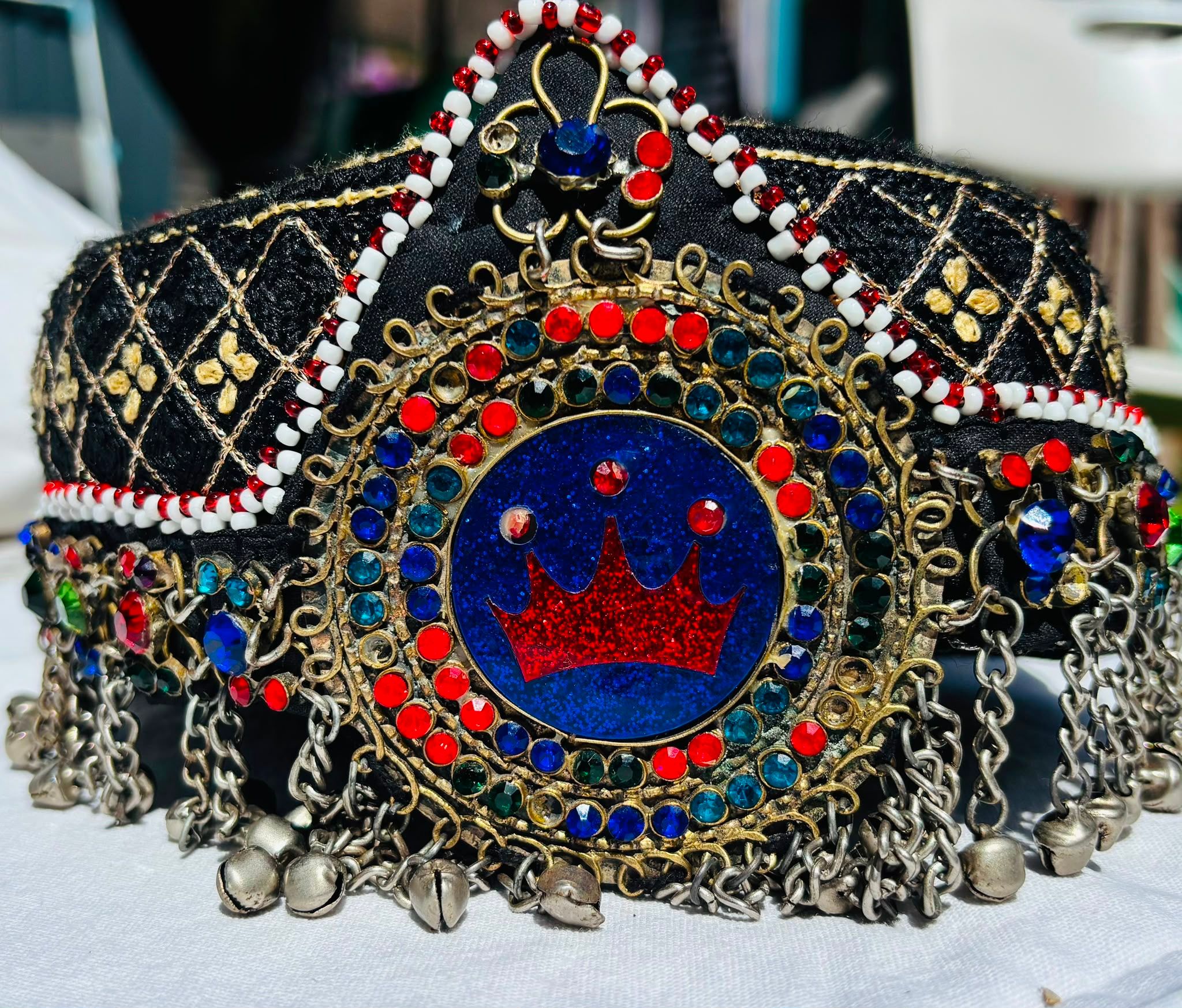
The belt at the back allows the waist to be subtly cinched, creating a more refined silhouette. Normally, both the dress and waistcoat have a headpiece accompanying them, adorned in vibrant stones and bells that jingle from the slightest movement.
The crown in the centre is more of an artistic choice, which contrasts with the otherwise traditional design of the piece.
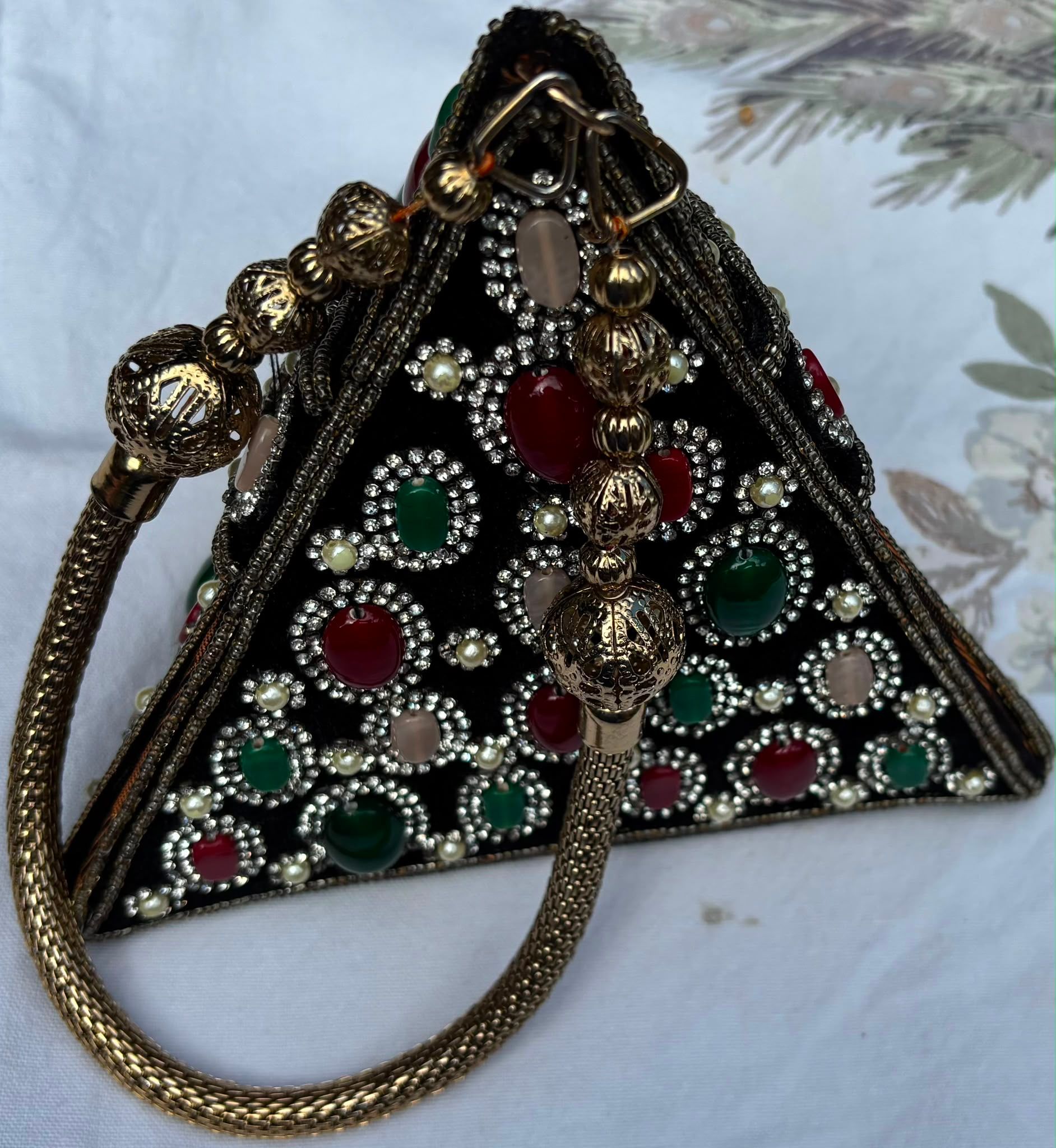
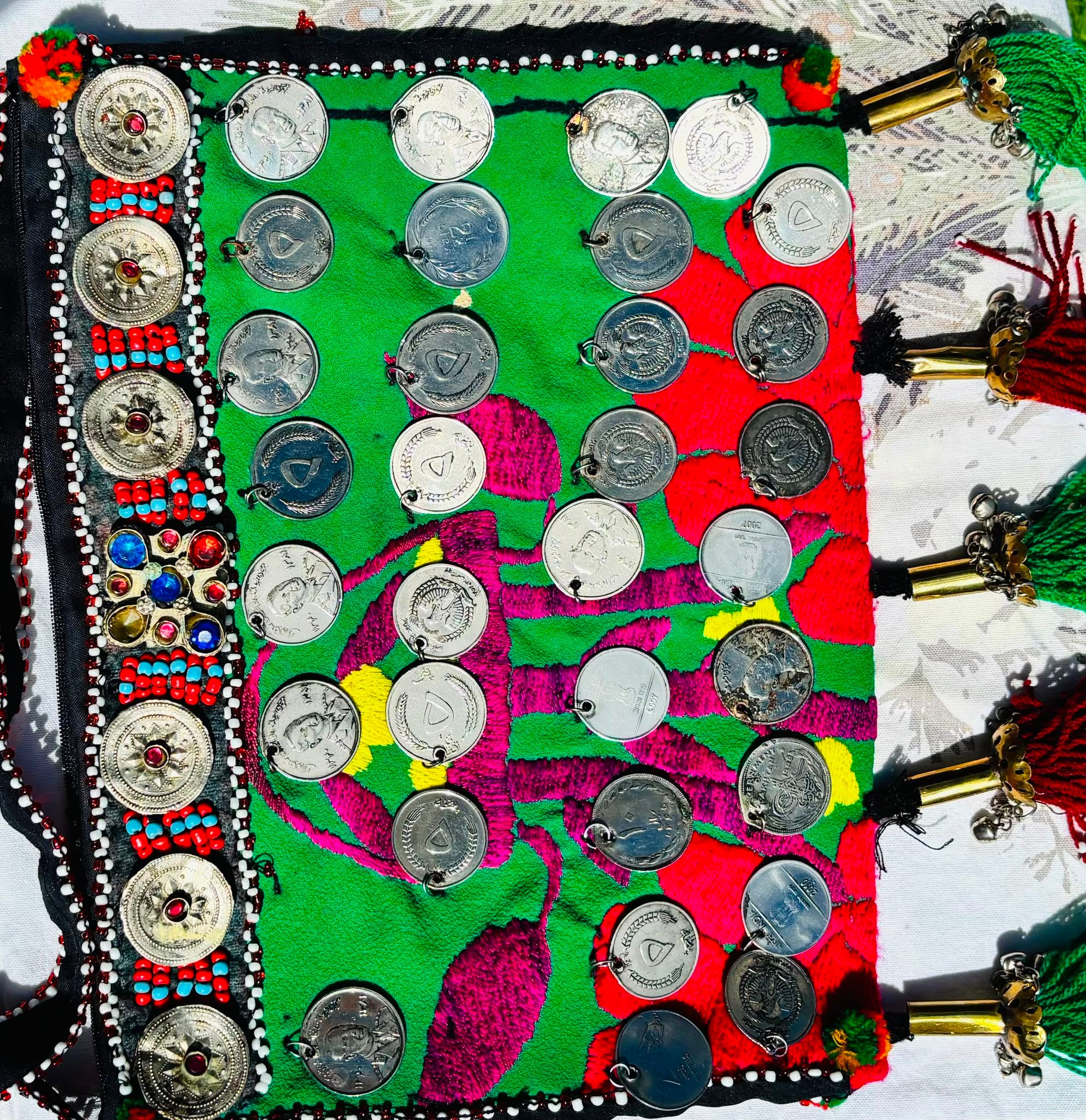
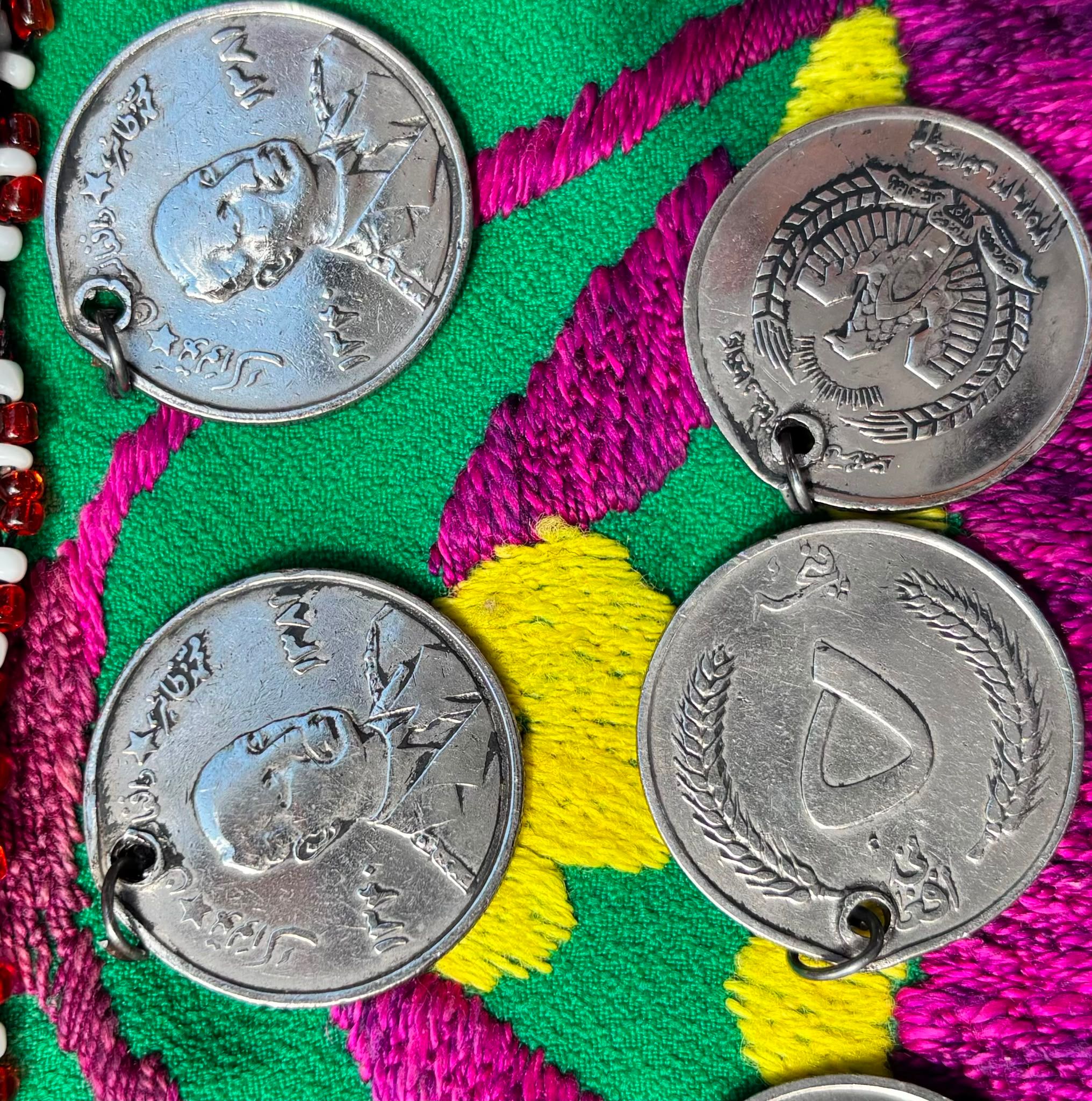
Afghan bags are usually decorated with elaborate beadwork and coins, producing wonderful pieces of art from everyday accessories. The bag I own has rows of genuine coins stitched within the front and back, with many bearing the face of the last king of Afghanistan, Mohammed Zahir Shah. Among these historic coins, there are several from both Pakistan and India mixed in and most interestingly, a single Canadian coin.
The diverse mixture of coins is very fitting for a country that has always been at the crossroads of culture and history. Although the bag is gorgeous, it is unfortunately not as practical for everyday use.
The jingle from the coins and tassels makes it impossible to sneak into a silent lecture hall; it announces your presence before you’ve even had the chance to enter the room.
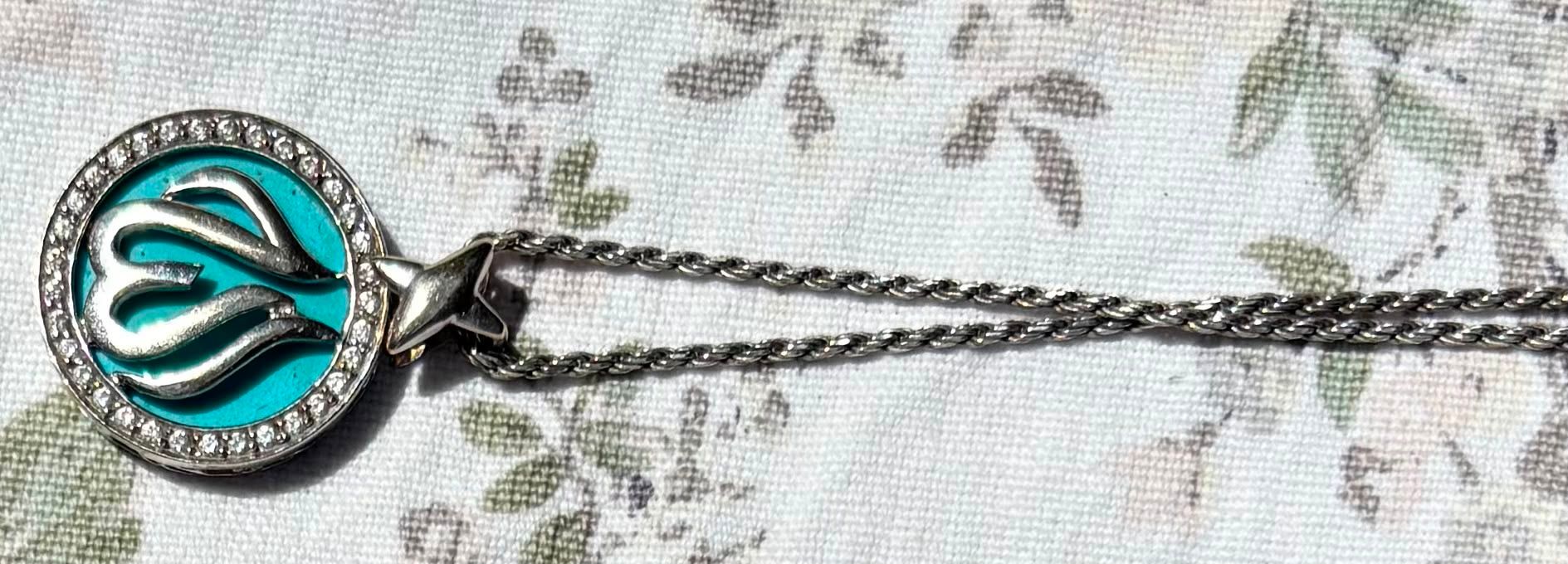
One of the first pieces of jewellery I ever received was a Ferozah (Turquoise) stone encased in silver, which was given to my mother on the day I was born. In Afghanistan, the Feroza stone has long been believed to bring good fortune and protection to the wearer.
Afghanistan is well-known for its gemstones, each carrying its own meaning. The Lapis Lazuli, for which Afghanistan is most renowned, has long been believed to sharpen the mind of the wearer and bring them inner peace.
Whether or not someone shares these beliefs, the intention behind these gifts is unquestionably beautiful. In Afghan culture, jewellery is rarely given as just an ornament for decoration. It is often given with the hopes of protecting and blessing the wearer alongside its beauty.
This thread connecting beauty and purpose is shown through the tradition of Sheen Khaal. These are traditional tattoos, particularly practised by some Pashtun tribes, where pigment was tattooed into the skin as blue-green dots on their faces and hands.
For women, it is typically tattooed on their cheeks, chin or forehead as a mark of beauty. According to some traditions, they were believed to distract the evil eye from the women’s beauty.
Men can carry these tattoos too, although they receive them more commonly on their hands or arms. My father has two of these tattoos, one on his forehead and the other on his wrist.
The first one was given to him when he was only a couple of months old, and he believes it was intended to ward off sickness. It has faded into nothing more than a little scar now.
The second one he tattooed himself when he was a young man, with nothing more than an unsterilised needle and some ashes. Somehow it survived without an infection, which still baffles me today. However, the practice has begun to become increasingly rare.
These tattoos are more associated with the older generation, and in some places, negative social perceptions have contributed to a decline in the number of younger people choosing to continue the tradition. It is a reminder of how easily culture can be lost when it isn’t passed down from one generation to another.
Culture isn’t just preserved in history books, it is in what we wear, make and remember it by. Nowadays, when people think of Afghanistan, a single image usually comes to mind. The blue burqa. Yet that image only captures a fraction of the story.
Afghan fashion is a tapestry of dresses embroidered with mirrors that catch the light, hand-stitched bags that announce your arrival before you have the chance to, jewellery given with wishes of prosperity and protection, and traditions that have been etched into the skin.
These traditions deserve to be protected, not just for their beauty, but for the memories they preserve, stories they carry and the generations they connect. As long as these threads continue to be woven from one generation to the next, the rest of Afghanistan’s story will continue to be told and remembered.