Journalismisadyingart
The death of Journalism
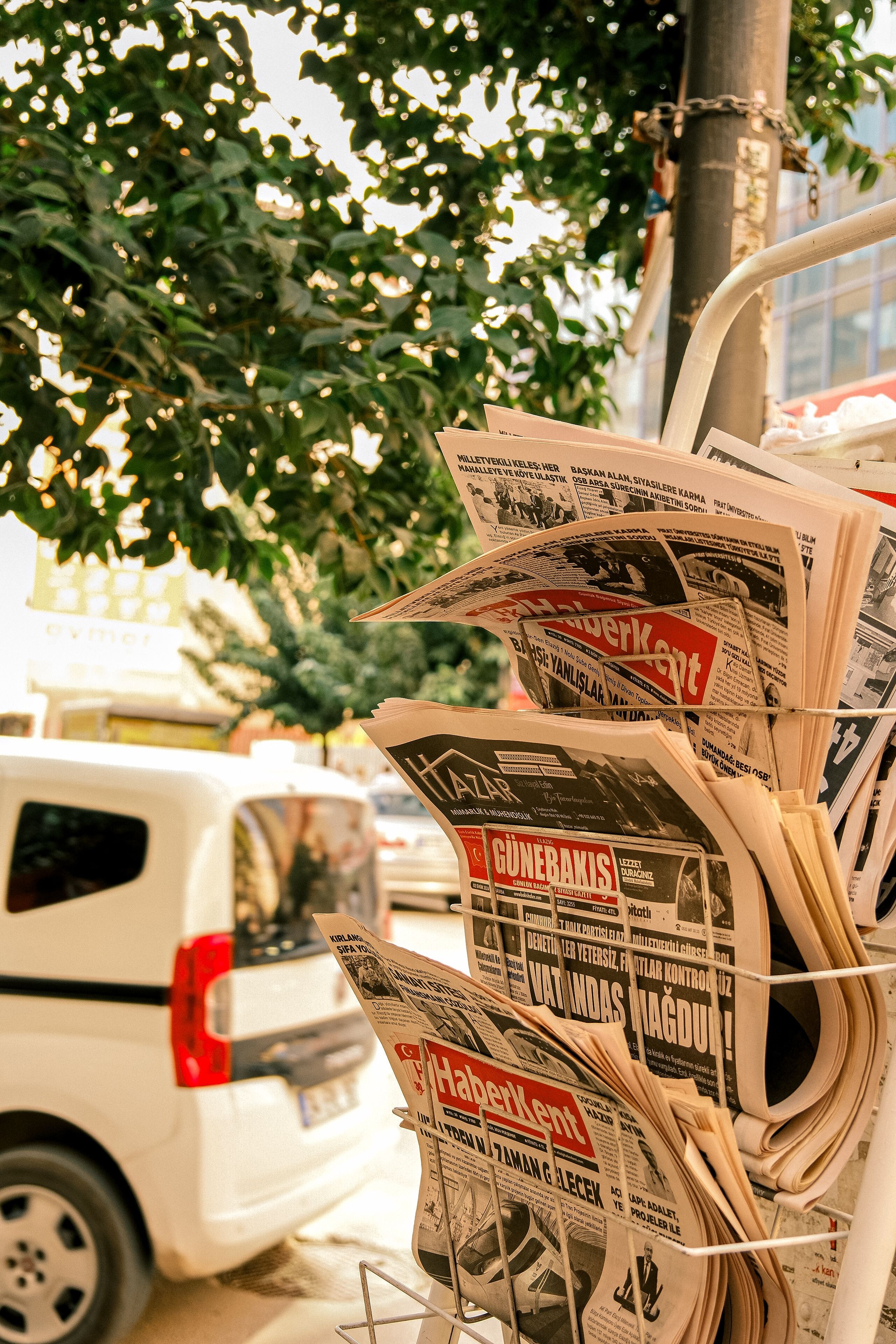
Journalism is a dying art. Once coined the ‘lifeblood of democracy,’ journalists are supposed to be entrusted with guarding democratic values and pursuing the truth.
Yet in our current social media landscape and post-COVID-19 world, the erosion of journalism is well underway. This is ever-present in journalism, being replaced by content, especially on platforms such as TikTok and Instagram.
With celebrities and public figures transforming from interviewee to interviewer, we lose the drive for insight and answers. Entertainment has grown, arguably, more important than serious journalism, leading to a de-professionalisation of the vocation.
Short-form content has come to replace long-form writing, with social media spearheading the decline in interest in critical pieces and thus the death of journalism.
After all, why read a 10-page article in a newspaper when you can watch a 60-second video with the press of a finger?
The Journalism driven out of the 19th Century owes its genesis to the working class, the drive to elevate their voices and cultivate a form of democratic communication. It was at this time that the word ‘journalist’ derived its modern meaning.
Signifying a shift from narrative-led journalism (that tended towards bias and reinforcing preconceived narratives) towards the impartiality and objectivity we have come to expect from journalists today.
This understanding of journalism has come to shift in our current climate; many journalists now favour independent platforms like Substack over trustworthy names. They build brands, amassing followers as such influencers would.
But who wouldn’t, when you can make more than double the standard salary without having to go through editors and proposals? Take Heather Cox Richardson, for example, the highest earner on Substack, generating an estimated $ 5 million per annum from her political and historical newsletter,Letter from an American.
A figure that frankly is demoralising when compared to that of freelancejournalism. Where half of the Uk’s freelancers are being offered less than 10p per word. Especially in a world where, without a brand or a niche, writing can feel like shouting into a void.
So, it is no wonder that many journalists are choosing to transfer to sites where interaction is almost immediate.
But whilst enticing, this rise in personal-driven pieces leads to a de-professionalisation of the art form.
Yancey Strickler notes in her article The Prestige Recession, ‘The decline of the critic mirrors the decline of the mediums they cover.’ She points out that with critics being devalued, the press itself has been devalued. No longer is the vocation seen as prestigious; it is now demoted to another form of content often done as a hobby.
This gives writers a sense of liberation from the trouble of employing fact-checkers and editors that slow down the immediacy of publication. Though there is a downside to self-publication, when writers forgo editors and the rigorous fact-checking of large newsrooms, misinformation becomes rife.
With larger publications, there was a more rigorous standard of fact-checking. Time magazine, for example, in 1923, in an attempt to instil credibility in the paper, was one of the first to begin employing fact-checkers. Without this part of the editorial process, the quality of stories we are reading declines; how can we trust the picture an article ispainting if the reference photo (the facts in this case) is incorrect itself? This only damages the art of journalism further, if we consider media as a counterbalance to large centres of power.
If journalism relies on being believed, and writers stop checking the facts, why should they be entrusted with the role of holding power to account?
Which brings us to another notable change in the field. No longer will a regular journalist's voice suffice; these days, the public’s attention is only drawn by large brands and recognisable figures.
Nowit's Actors on Actors, Chicken Shop Dates and the likes of Alex Cooper’s Call Her Daddy. Granted, these new forms of media allow the public a more authentic look into the lives of celebrities.
Something ourparasocial culture craves. Tobias Hess explores this in his article, Why Are All Pop Star Interviews Like That? He observes that these new forms of interview allow show hosts ‘to scratch the ultimate itch for our parasocial culture: to be strikingly vulnerable and open about your struggles while still in proximity to, and beloved by, our culture’s coolest.’
This creates an interesting dyn amic, where there was once a divide in class; both the interviewer and interviewee are equally privileged. Often leading to the ideals of the interviewees being affirmed instead of questioned or challenged.
Call Her Daddy is a prime example of this. Starting as a relationship advice podcast in 2018, then transforming into a celebrity interview show and gaining a $16 million deal with Spotify in 2021, the show has no doubt found success in the market. Yet despite the rising success with audiences, the show leaves something to be desired.
Cooper’s interviews have a giddy sensibility, as if a superfan were asking their favourite celebrity a question. It becomes more of a surface-level conversation filled with flattery.
This is not to say her content is not interesting; she clearly has a team researching questions and knows how to form a brand. But her sycophantic relationship with her guests often overshadows the substance that traditional journalism forefronts.
Obviously, this is not to say that all forms of content creation in journalism have a negative impact. As our world grows and changes, we must adapt with it. A successful Woman navigating the changing landscape of journalism is Amelia Dimoldenberg.
Her show, Chicken Shop Date, a concept dismissed by her professors now a globally successful brand. The informal, frankly, awkward style of her interviews creates viral moments and unveils access to a side of celebrities very rarely seen in the uptight, formulaic red-carpet interviews of the past. Despite this success, this media sensation only contributes to the loosening power of journalism as a profession.
No longer will regular interviews satiate the public; they have to be clip-worthy, a viral moment. Red carpet interviewers now pursue this to a detrimental extent. The candid likability of Dimoldenberg is not an exact science.
This was painfully showcased in the BBC’s 2024 BAFTA red carpet interview with Andrew Scott. An attempt at a lewd joke regarding the famous naked dancing scene in Saltburn left the actor and audiences with a bad taste in their mouths. Clips of the interview’s painful interaction were shared widely on social media.
Enough that the complaints forced the BBC to issue an apology, claiming it was meant to be a ‘light-hearted reflection of the discussion’ the scene provoked. Showcasing how the entertainment, even for many large publications, has grown more important than serious journalism.
The demand for interaction and thus publicity is driving the shift towards content. This is not to say that the future of journalism is doomed, though this article’s hyperbolic title would suggest so.
Only that the shifting media landscape and rise of interaction-driven content mean we must remain aware so as not to lose journalism as an art form.